Expert Articles for Smarter Car Care
Mercedes-Benz Gearbox Jerking and Delayed Shifting: What Should Be Diagnosed Before Transmission Repair?
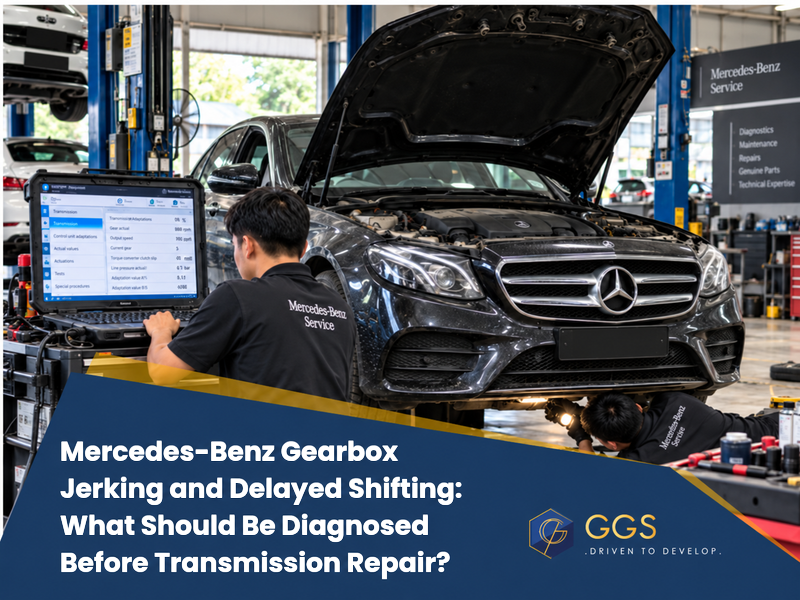
Table of Contents
A Mercedes-Benz that jerks, hesitates, changes gear harshly or takes too long to engage Drive or Reverse can quickly raise concerns about gearbox failure.
From a workshop perspective, however, these symptoms should be treated as evidence to investigate, not proof that the transmission needs an overhaul.
Modern Mercedes-Benz automatic transmissions rely on hydraulic pressure, transmission fluid, electronic control, speed sensors, adaptation values, solenoids, the valve body, torque-converter operation and engine torque input working together. A fault in one area can change the way the transmission behaves and sometimes make a relatively specific problem feel like a complete gearbox failure.
The correct workshop approach is therefore to identify exactly when the symptom occurs, what the control system is doing at that moment, and which system is actually responsible before recommending major transmission repair.
Start by Defining the Exact Gearbox Symptom
“Jerking” is too broad to be a diagnosis.
A workshop should first establish exactly what the driver is experiencing. A harsh 1-2 upshift is different from a delayed engagement into Drive. A 2-3 flare is different from a shudder under steady throttle. A harsh downshift while slowing down points the investigation in another direction again.
Useful questions include:
- Does the symptom happen only when the transmission is cold?
- Does it appear after the vehicle is fully warmed up?
- Is one particular gear change affected?
- Does the engine speed rise before the next gear engages?
- Is there a delay when selecting Drive or Reverse?
- Does the vehicle shudder at a steady speed?
- Does the transmission enter limp mode?
- Does the problem change with throttle position or engine load?
This symptom pattern helps the workshop decide which data and components deserve attention first.
Perform a Mercedes-Benz Transmission Diagnostic Scan
Modern Mercedes-Benz transmissions are electronically managed, so scan diagnosis should normally happen before parts are removed.
Depending on the transmission and model, the workshop may need to examine the transmission control system, often referred to within Mercedes-Benz applications as the VGS or transmission control unit.
Stored fault codes may identify issues involving speed signals, solenoids, transmission control, communication faults or other electronic abnormalities. Live data can then show what is happening while the vehicle is actually reproducing the symptom.
Important values may include:
- input shaft speed;
- output shaft speed;
- commanded gear;
- actual gear behaviour;
- transmission temperature;
- clutch or shift-related adaptation data;
- relevant pressure-control values.
The important point is not simply to read a fault code. The workshop should determine whether the code actually matches the symptom.
Check Transmission Fluid Before Blaming Internal Components
Automatic transmission fluid performs several jobs at the same time. It lubricates components, removes heat and provides the hydraulic medium that allows clutches and control elements to operate.
Incorrect fluid level can interfere with hydraulic operation. Degraded fluid may affect shift quality, while burnt or contaminated fluid can provide evidence of overheating or internal wear.
Fluid inspection should therefore include:
- correct fluid level;
- fluid temperature during checking;
- fluid colour and smell;
- leakage;
- contamination;
- evidence of metallic material;
- service history where available.
A workshop should also follow the correct procedure for the specific transmission, because fluid level on modern Mercedes-Benz gearboxes may need to be checked within a defined temperature range.
The aim is not merely to decide whether the fluid is “old”. The aim is to determine whether fluid condition or hydraulic supply could explain the shifting complaint.
Evaluate the Valve Body, Solenoids and Hydraulic Control
If the symptom remains after the initial scan and fluid inspection, hydraulic control becomes an important area of investigation.
The valve body directs transmission fluid to the correct circuits. Pressure-control and shift solenoids regulate how clutches and other transmission elements are applied.
A problem in this system can cause symptoms such as:
- harsh engagement;
- delayed shifting;
- inconsistent shift quality;
- flare between gears;
- repeated problems during one particular gear change.
From a workshop perspective, the key question is:
Is the transmission being commanded to shift correctly, but hydraulic control is failing to carry out that command properly?
That distinction can help separate a control or valve-body problem from deeper mechanical damage.
Check Mercedes-Benz Speed Sensors, Conductor Plate and Transmission Electronics
Some Mercedes-Benz transmission systems use integrated electronics that include transmission speed sensing and control components. On certain transmission generations, conductor-plate-related faults can therefore become relevant when there are abnormal speed signals, gear-selection problems or transmission fault codes.
Input and output speed data are especially important because the transmission control system uses these signals to determine whether the expected gear behaviour is actually occurring.
If the signals are implausible or intermittent, the workshop may need to investigate:
- speed sensors;
- conductor-plate-related components where applicable;
- wiring;
- electrical connectors;
- voltage supply;
- control-module communication.
This is one reason a jerking transmission should not automatically be condemned mechanically. A control-system fault can sometimes create symptoms that feel severe from behind the wheel.
Review Transmission Adaptation Values Properly
Mercedes-Benz automatic transmissions use learned adaptation values to fine-tune shift behaviour over time.
These values can reflect how the transmission control system is compensating for factors such as clutch fill time, hydraulic behaviour and component wear.
Abnormal adaptation values can be diagnostically useful, particularly when one shift transition consistently behaves differently from the others.
However, adaptation values are not a standalone diagnosis.
They should be interpreted together with:
- fault codes;
- transmission temperature;
- live data;
- fluid condition;
- road-test observations;
- hydraulic behaviour.
A workshop should also be careful about resetting adaptations too early. Resetting learned values may temporarily change shift quality, but it does not repair an underlying hydraulic, electrical or mechanical fault.
Separate Gear Changes From Torque-Converter Shudder
Not every transmission-related vibration happens during an actual gear change.
The torque converter, especially its lock-up clutch, can produce shudder, vibration or slipping under certain operating conditions.
For example, a driver may report that the vehicle “jerks” while cruising, but the actual problem may occur when the torque converter clutch begins to lock rather than when the transmission changes gear.
The workshop should therefore distinguish between:
- a harsh upshift;
- a harsh downshift;
- RPM flare between gears;
- torque-converter lock-up shudder;
- slipping under load;
- vibration at steady throttle.
That distinction helps avoid diagnosing the wrong part of the transmission.
Rule Out Engine and Drivetrain Problems That Mimic Gearbox Faults
One of the most important workshop checks is confirming that the transmission is actually the source of the complaint.
An engine misfire can interrupt torque delivery suddenly. From the driver’s seat, that interruption may feel like a harsh transmission shift.
Throttle-response problems can create a similar effect by changing engine torque unexpectedly during a shift.
Engine and transmission mounts also deserve attention. If a mount is worn or collapsed, normal drivetrain movement may become much more noticeable and produce a strong thump during gear engagement.
If excessive drivetrain movement, vibration or impact is present, an undercarriage inspection may help identify related mechanical issues.
Use the Road Test to Confirm What the Data Is Showing
A proper road test is not simply a drive around the block.
The technician should attempt to reproduce the exact complaint while monitoring relevant transmission data.
For example:
- If the vehicle jerks only on the 2-3 shift, the workshop should concentrate on what happens during that transition.
- If the problem appears only when cold, cold-start data becomes particularly important.
- If a delay occurs only when selecting Reverse, the investigation should focus on engagement behaviour rather than general shift quality.
- If the symptom appears only during steady-speed cruising, torque-converter behaviour may deserve more attention.
The goal is to connect the driver’s symptom with measurable evidence.
When Does Internal Transmission Damage Become More Likely?
Internal gearbox damage becomes more likely when external, electrical and hydraulic causes have been systematically ruled out and there is stronger evidence of internal failure.
Examples may include:
- persistent slipping;
- repeated abnormal clutch behaviour;
- significant metallic contamination;
- abnormal pressure or clutch-fill behaviour;
- internal noise;
- loss of drive;
- confirmed mechanical wear.
At this stage, opening the transmission or recommending internal repair may be justified.
The key difference is that the recommendation is now based on a chain of evidence rather than the original symptom alone.
When Should Repair, Overhaul or Replacement Be Recommended?
The repair level should match the confirmed fault.
A workshop may recommend a targeted repair when the problem is limited to a sensor, solenoid, valve-body component or another identifiable control issue.
Internal repair may be necessary when damaged clutch elements or internal mechanical components have been confirmed.
An overhaul may be justified when several internal components are affected. Full transmission replacement should generally be considered only when repair is technically unsuitable, uneconomical or unlikely to restore reliable operation.
Before recommending major work, the workshop should be able to document:
- the customer’s complaint;
- road-test findings;
- fault codes;
- live-data observations;
- fluid condition;
- relevant electrical or hydraulic findings;
- evidence supporting the final repair recommendation.
That documentation protects both the vehicle owner and the workshop.
Why a Diagnosis-First Approach Matters
Mercedes-Benz gearbox jerking and delayed shifting can have many causes.
The transmission itself may be damaged, but that conclusion should come at the end of the diagnostic process, not the beginning.
A professional workshop should first determine the exact symptom, scan the transmission control system, inspect fluid condition, analyse hydraulic and electronic behaviour, review adaptation values, examine torque-converter operation and rule out engine or drivetrain causes.
Only when the evidence points towards internal failure should major transmission repair or overhaul become the next step.
Frequently Asked Questions
1. Why does my Mercedes-Benz jerk only when the gearbox is cold?
Cold-only jerking may be influenced by fluid behaviour, hydraulic control, adaptation values or component operation at lower temperatures. The workshop should compare cold and warm data before deciding on the cause.
2. Why is there a delay when selecting Drive or Reverse?
Delayed engagement can be related to hydraulic pressure, fluid condition, control-system operation or internal clutch application. It should be diagnosed separately from harsh shifting while driving.
3. Can a Mercedes-Benz conductor plate problem cause shifting issues?
On applicable transmission systems, faults involving integrated transmission electronics or speed sensing can affect gear selection and shift behaviour. Scan data and speed-sensor readings help determine whether this area should be investigated.
4. Can low transmission fluid cause jerking?
Yes. Incorrect fluid level can affect hydraulic pressure and clutch application. The level should be checked according to the correct temperature and service procedure.
5. Can a valve body problem cause delayed shifting?
Yes. Valve-body wear, sticking valves or pressure-control problems can interfere with hydraulic operation and create delayed, harsh or inconsistent shifts.
6. Should transmission adaptations be reset when the gearbox jerks?
Not automatically. Adaptation values can provide useful diagnostic evidence. Resetting them before identifying the underlying cause may hide useful information without fixing the fault.
7. Can engine misfire feel like a gearbox problem?
Yes. A misfire interrupts engine torque and can create a sudden jerk that feels similar to a harsh gear change.
8. Can worn mounts make transmission shifts feel worse?
Yes. Worn engine or transmission mounts allow greater drivetrain movement, which can make normal gear engagement feel much harsher.
9. How can a workshop tell whether the torque converter is the problem?
The technician should determine whether the shudder or vibration occurs during torque-converter lock-up rather than during an actual gear change, while comparing road-test behaviour with live data.
10. When does a Mercedes-Benz gearbox actually need an overhaul?
An overhaul is generally considered when diagnosis confirms significant internal wear or damage affecting multiple transmission components, after external, electronic and hydraulic causes have been properly evaluated.