Expert Articles for Smarter Car Care
Undercarriage Inspection for Luxury Cars: What Workshops Check Beneath the Vehicle
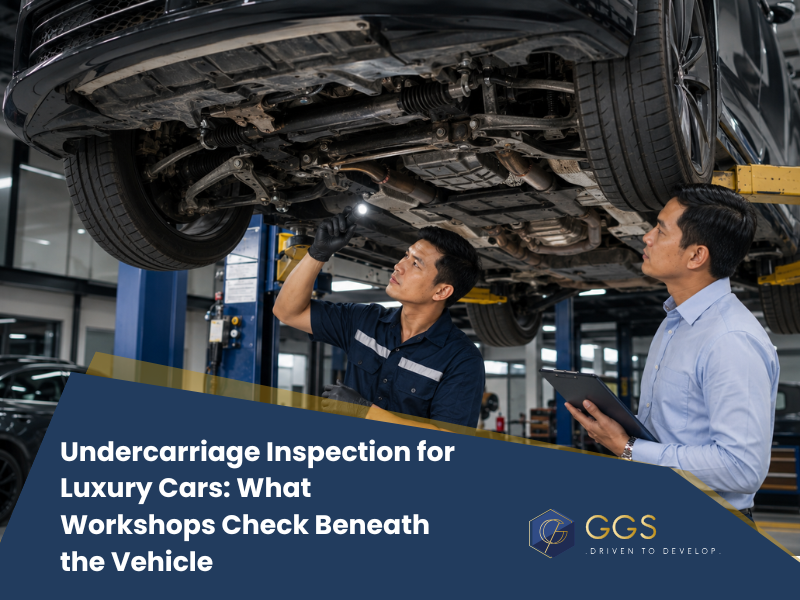
Table of Contents
Introduction
Luxury cars are designed to deliver comfort, stability, quietness and confident handling. Most owners pay close attention to the exterior paintwork, interior condition, engine sound and dashboard warning lights. However, many important vehicle problems begin in an area that owners rarely see — the undercarriage.
The undercarriage refers to the underside of the vehicle. It includes key components such as suspension arms, bushings, steering joints, brake lines, engine oil sump, gearbox housing, exhaust mountings, underbody panels and structural areas. Because these parts are located beneath the car, many problems can remain hidden until they become more serious.
An undercarriage inspection helps detect early wear, oil leaks, impact damage, loose joints, brake line concerns, exhaust issues and corrosion before they affect safety, ride comfort or repair cost. For luxury and premium vehicles, this type of inspection is especially important because even small issues underneath the vehicle can affect refinement, handling and long-term reliability.
What Is an Undercarriage Inspection?
An undercarriage inspection is a workshop check of the vehicle’s underside. It is usually carried out using a hydraulic hoist or inspection lift, allowing the technician to examine parts that cannot be clearly seen from ground level.
This inspection is more than a quick look underneath the car. A proper check may include a road test, safe lifting, visual inspection, leak tracing, suspension play checks, brake line inspection, exhaust mounting checks and a repair priority explanation.
The goal is to understand the true condition of the vehicle beneath the surface. This helps the owner make informed decisions before minor hidden problems turn into major repairs.
Why Luxury Cars Need Proper Undercarriage Checks
Luxury cars are often heavier, more complex and more sensitive to ride quality compared with ordinary vehicles. Their suspension, steering and braking systems are designed to provide smoothness, stability and confidence. When undercarriage components wear out, the owner may notice knocking sounds, vibration, uneven tyre wear, poor handling or a less comfortable ride.
Some issues are also safety-related. Worn ball joints, damaged brake lines, loose suspension parts or severe leaks should not be ignored. Other problems, such as minor oil seepage or cracked rubber bushings, may not be urgent immediately but should be monitored.
Proper undercarriage inspection helps separate urgent repairs from preventive maintenance items. This gives the owner a clearer understanding of what must be fixed now and what can be planned later.
What Workshops Check Beneath the Vehicle
Lower Arms, Control Arms and Suspension Bushings
Lower arms and control arms help support wheel movement and suspension geometry. Bushings absorb movement and reduce vibration between metal components.
When bushings crack or wear out, the vehicle may produce knocking sounds over bumps, feel unstable during cornering, or show uneven tyre wear. In luxury cars, worn bushings can also make the ride feel less refined.
Ball Joints, Tie Rods and Steering Components
Ball joints and tie rods are important for steering control and wheel movement. If these components become loose, the vehicle may feel vague, unstable or slow to respond. In some cases, the car may pull to one side or feel unsafe at higher speeds.
A workshop checks these parts for looseness, torn boots, excessive movement and signs of wear.
Shock Absorbers and Suspension Joints
Shock absorbers help control bouncing and body movement. If they leak or weaken, the car may feel floaty, unstable or uncomfortable over uneven roads.
Suspension joints are also checked for cracks, play and abnormal movement. These components affect comfort, handling and tyre contact with the road.
Engine Oil Sump and Oil Leaks
Oil leaks are often easier to trace from underneath the vehicle. A technician may inspect the engine oil sump, drain plug, gasket areas and nearby components for oil stains or fresh leakage.
A small leak may look minor at first, but if ignored, it can worsen and affect engine protection. The inspection should identify where the oil is coming from, not just where it has spread.
Gearbox, Differential and Drivetrain Leaks
Luxury and performance vehicles may have complex drivetrain systems. The gearbox, differential, axle seals and related housings should be checked for fluid seepage or leakage.
Transmission or differential fluid leaks should not be ignored because low fluid levels may affect long-term reliability and lead to expensive repairs.
Brake Lines, Brake Hoses and Fluid Leaks
Brake lines and hoses are safety-critical. They carry brake fluid pressure to the braking system. Cracks, corrosion, leakage or damaged brake hoses can affect braking performance.
During an undercarriage inspection, the workshop should check brake line routing, hose condition, fluid stains and any sign of wear or impact damage.
Exhaust Pipes and Exhaust Mountings
The exhaust system runs underneath the vehicle and is supported by brackets and rubber mountings. If these parts become loose or worn, the owner may hear rattling, vibration or scraping noises.
The technician checks exhaust pipes, joints, rubber hangers, brackets and possible leaks. A loose exhaust mounting can create noise even when the engine and suspension are normal.
Underbody Panels, Undertray and Impact Damage
Many luxury vehicles have underbody panels or undertrays to protect components and improve airflow. These panels can be damaged by road debris, ramps, potholes or improper lifting.
A damaged undertray may hang loose, scrape the road or expose important parts to water and debris. Bent brackets, missing fasteners and impact marks should also be noted.
Rust, Corrosion and Structural Areas
Rust and corrosion can develop on exposed metal areas, especially in older vehicles or cars exposed to wet conditions. While light surface rust may not always be serious, corrosion on structural areas, brake lines or mounting points requires attention.
A proper inspection checks subframes, brackets, exposed metal parts and areas where water or dirt may collect.
Tyre Wear, Wheel Bearings and Alignment Clues
Uneven tyre wear often provides clues about hidden undercarriage problems. Worn bushings, weak shock absorbers, poor alignment, wheel bearing play or steering component wear can all affect tyre condition.
By inspecting the undercarriage together with tyre wear patterns, a workshop can better understand the cause instead of only replacing tyres.
Common Signs You May Need an Undercarriage Inspection
Owners should consider an undercarriage inspection if they notice knocking sounds over bumps, oil spots under the car, vibration while driving, uneven tyre wear, poor handling, pulling to one side or scraping noise beneath the vehicle.
It is also useful after hitting a pothole, road debris, a steep ramp or a kerb. Even if the car looks normal from the outside, hidden damage may appear underneath.
Used luxury car buyers may also benefit from an undercarriage inspection before purchase. It can reveal oil leaks, impact damage, worn suspension parts, corrosion and repair signs that may not be obvious during a normal viewing.
Why Some Problems Are Missed Without a Hoist
Some undercarriage problems cannot be checked properly from ground level. A hoist allows the technician to inspect the underside safely and clearly. It also allows movement checks on suspension joints, steering components and wheel assemblies.
Without a hoist, leaks may be misread, hidden damage may be missed, and worn components may not be tested correctly. For premium vehicles, where repairs can be costly, proper access is important for accurate diagnosis.
How Workshops Perform an Undercarriage Inspection
A professional inspection usually begins with a customer symptom interview. The technician asks about noises, vibration, leaks, handling changes, recent impacts and service history.
A road test may then be performed to reproduce the complaint. This helps identify knocking, pulling, vibration, steering looseness or exhaust rattling before the car is lifted.
Once the vehicle is safely raised, the technician performs a visual inspection. This includes checking suspension arms, bushings, joints, brake lines, fluid leaks, exhaust parts, underbody panels, drivetrain areas and structural sections.
The technician may also perform movement checks to detect looseness in suspension or steering components. Leak tracing may be carried out to identify the actual source of oil, coolant, brake fluid or transmission fluid.
After inspection, the workshop should explain the findings clearly. The owner should understand what is urgent, what affects safety, what affects comfort, and what can be monitored.
Safety and Responsible Workshop Considerations
Undercarriage inspection is closely linked to roadworthiness. Suspension, steering, brake lines and tyres all affect vehicle control. Serious wear, leaks or damage should be addressed promptly.
A responsible workshop should also follow safe lifting procedures, use correct lifting points, secure the vehicle properly and ensure technicians use suitable protective equipment.
Environmental responsibility also matters. Used oil, transmission fluid, coolant, brake fluid and contaminated materials should be handled and disposed of properly. Good workshop practice includes clear inspection notes, photos where useful, and transparent repair recommendations.
FAQ
1. What is an undercarriage inspection?
An undercarriage inspection is a workshop check of the vehicle’s underside, including suspension, steering, brake lines, exhaust parts, underbody panels, leaks and drivetrain components.
2. Why do luxury cars need undercarriage inspection?
Luxury cars are designed for comfort, stability and refined handling. Hidden wear underneath the vehicle can affect ride quality, safety and repair cost.
3. What problems can be found during undercarriage inspection?
A workshop may find oil leaks, worn bushings, loose joints, brake line concerns, exhaust mounting issues, impact damage, rust, corrosion and uneven tyre wear causes.
4. Can undercarriage inspection find oil leaks?
Yes. Oil leaks are often easier to trace from underneath because the technician can inspect the oil sump, gearbox, differential, seals and surrounding parts.
5. Why is a hoist important for undercarriage inspection?
A hoist allows the technician to inspect the underside safely and clearly. Many leaks, worn parts and damaged panels cannot be seen properly from ground level.
6. Can undercarriage damage affect handling?
Yes. Worn suspension components, damaged lower arms, loose steering parts or bent brackets can affect stability, steering response and tyre wear.
7. Is undercarriage inspection useful before buying a used premium car?
Yes. It can reveal hidden leaks, impact damage, worn suspension parts, corrosion and previous repair signs that may not be visible during an exterior check.
8. When should I request an undercarriage inspection?
You should request one if there are oil spots, knocking sounds, vibration, uneven tyre wear, poor handling, scraping noise, or after hitting potholes, ramps or road debris.
9. Can brake line problems be found underneath the car?
Yes. Brake lines and hoses are often routed beneath the vehicle. Inspection can detect cracks, corrosion, leaks or damaged sections.
10. What should a workshop explain after inspection?
A workshop should explain what was checked, what was found, which issues are urgent, what can be monitored, and how each issue affects safety, comfort or repair cost.