Expert Articles for Smarter Car Care
Why Is Your Continental Car Jerking? Common Causes, Diagnosis and Repair Decisions
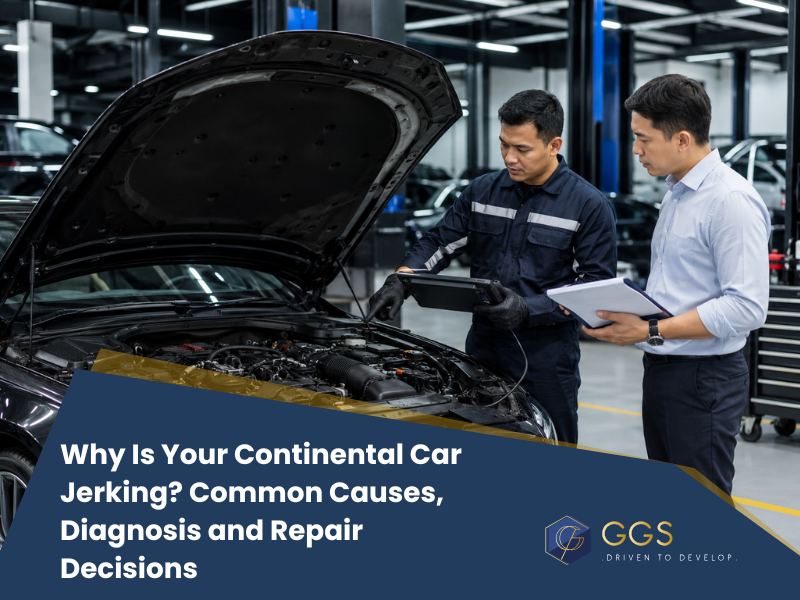
Table of Contents
Introduction
When a luxury or continental car starts jerking, hesitating, juddering or shaking, it can be worrying for the owner. These vehicles are designed to deliver smooth acceleration, refined gear changes and comfortable driving. Therefore, even a small vibration or sudden jerk can feel obvious, especially during city driving, low-speed traffic or long-distance cruising.
Car jerking is not a diagnosis by itself. It is a symptom. The actual cause may come from the engine, fuel system, air intake, transmission, mountings, braking system, sensors or electronic control modules. This is why a proper workshop inspection is important before replacing any parts.
For owners of premium vehicles, the key is not to guess too early. A responsible workshop should first understand when the jerking happens, carry out a road test, perform diagnostic scanning, check live data, and inspect the relevant mechanical components. This approach helps avoid unnecessary repair costs and ensures the real cause is identified.
What Does Jerking Mean in a Luxury or Continental Car?
Jerking usually means the vehicle is not moving smoothly. The car may feel like it suddenly pulls forward, loses power briefly, hesitates before acceleration, shakes when idling, or feels rough when changing gear.
Some owners describe it as a “kick”, “judder”, “vibration”, “hesitation” or “rough pull”. The symptom can happen occasionally or frequently. It may appear only when the engine is cold, after the car warms up, during stop-go traffic, when accelerating uphill, or when braking.
In luxury and continental vehicles, this symptom should not be ignored. Modern premium vehicles rely on many connected systems, including electronic throttle control, transmission control, fuel pressure regulation, turbo boost management and multiple sensors. A fault in one area can affect how the whole vehicle behaves.
Why Premium Vehicles Need Careful Diagnosis
Luxury and continental cars are more complex than basic vehicles. Many use advanced engines, automatic or dual-clutch transmissions, electronic control modules, adaptive driving systems and comfort-focused mountings. These systems are designed to work together smoothly.
Because of this, the same jerking symptom can have different causes. For example, jerking during acceleration may be caused by worn spark plugs, weak ignition coils, dirty fuel injectors, a sensor fault, low fuel pressure, worn engine mountings or transmission hesitation.
This is why a diagnostic-led workshop should not immediately assume that the gearbox has failed. A proper inspection can separate an engine misfire from a transmission issue, or a mounting problem from a braking-related vibration.
Common Situations When a Luxury or Continental Car Jerks
Jerking When Accelerating
If the car jerks when accelerating, the cause may be related to poor combustion, fuel delivery issues, air intake imbalance, sensor faults or drivetrain movement.
Common causes include worn spark plugs, weak ignition coils, dirty fuel injectors, restricted fuel flow, a dirty throttle body, faulty airflow readings or unstable turbo boost pressure. In some cases, worn engine or gearbox mountings can also make the car feel rough when power is applied.
Acceleration jerking should be checked early because it may affect overtaking confidence, engine performance and driving safety.
Jerking at Low Speed or in Stop-Go Traffic
Many owners first notice jerking during low-speed driving, especially in city traffic. The car may feel uncomfortable when moving from a stop, crawling in traffic or shifting between lower gears.
Possible causes include transmission adaptation issues, clutch engagement behaviour, throttle response problems, worn mountings, idle control issues or sensor calibration faults. Low-speed jerking can be difficult to diagnose without a road test because the symptom may only appear under specific driving conditions.
Jerking When Changing Gear
Jerking during gear changes can feel like a sudden push, delay, knock or rough engagement. This may be linked to transmission fluid condition, gearbox mount wear, clutch pack behaviour, torque converter issues, transmission control data or software adaptation.
However, not every gear-change jerk means major gearbox failure. Sometimes the issue may be external, such as worn mountings, old fluid, sensor irregularities or poor engine response. A workshop should confirm the root cause before recommending major repairs.
Jerking While Cruising
If the car jerks while driving at a constant speed, the issue may involve intermittent misfire, unstable fuel pressure, sensor signal problems, vacuum leaks, turbo boost fluctuation or transmission lock-up behaviour.
This type of jerking can be frustrating because the car may drive normally at times and suddenly feel rough. Diagnostic scanning and live data reading are useful because some faults only appear under certain engine load or speed conditions.
Jerking When Braking
If jerking, shaking or pulsing happens mainly during braking, the problem may not be engine-related. Brake discs, brake pads, calipers, wheel hubs, tyres, suspension bushings or ABS-related components may be involved.
Luxury vehicles are sensitive to brake vibration because they are built for refinement and stability. Even uneven brake disc surfaces or worn suspension components can be felt clearly through the steering wheel, brake pedal or cabin.
Jerking or Shaking While Idling
If the vehicle shakes or jerks while stationary, the cause may involve rough idle, ignition faults, injector imbalance, air intake leaks, throttle body problems, worn engine mountings or sensor faults.
A rough idle should be checked because it may indicate poor combustion, unstable engine control or excessive vibration transfer into the cabin.
Common Causes of Jerking in Luxury and Continental Cars
Ignition System Faults
The ignition system creates the spark needed for combustion. If spark plugs or ignition coils are weak, worn or inconsistent, the engine may misfire. This can cause rough acceleration, shaking, hesitation and poor fuel efficiency.
Fuel Delivery Problems
Modern premium vehicles need accurate fuel delivery. Dirty injectors, weak fuel pumps, blocked filters or unstable fuel pressure can cause the engine to hesitate or jerk, especially during acceleration.
Air Intake and Sensor Problems
The engine needs the correct air-fuel mixture. A dirty air filter, faulty airflow sensor, oxygen sensor issue, throttle body problem or intake leak may cause incorrect readings. This can lead to rough performance, poor acceleration and jerking.
Transmission and Gearbox Issues
Transmission-related jerking may happen when gear engagement is not smooth. Possible causes include old transmission fluid, clutch wear, torque converter behaviour, gearbox mount wear, control module issues or adaptation problems.
Engine and Gearbox Mounting Wear
Mountings help absorb engine and drivetrain movement. When they wear out, the car may feel rough during acceleration, gear changes or idling. In luxury vehicles, worn mountings are often noticed earlier because owners expect a smooth cabin experience.
Turbocharger and Boost Control Irregularities
Many continental vehicles use turbocharged engines. If boost pressure is unstable, or if there is an intake leak, faulty sensor or boost control issue, the car may hesitate or jerk during acceleration.
Brake and Suspension-Related Vibration
Not every jerking complaint comes from the engine or gearbox. Brake disc vibration, worn bushings, tyre issues, wheel bearing wear or suspension movement can also create shaking or pulling that feels like jerking.
How a Premium Workshop Diagnoses Jerking Problems
A professional workshop should begin by asking the owner detailed questions. When does the jerking happen? Is it during acceleration, braking, idling or gear changes? Does it happen when the engine is cold or hot? Is there any warning light? Did it happen after servicing, refuelling or a battery change?
Next, the technician should conduct a road test to reproduce the symptom. This helps identify whether the problem feels engine-related, transmission-related, brake-related or mounting-related.
After that, diagnostic scanning and live data reading may be required. Fault codes, misfire counters, fuel trim readings, sensor values, boost pressure data and transmission data can provide important clues. However, scan results should be supported by physical inspection.
The workshop should then inspect relevant components such as spark plugs, ignition coils, injectors, throttle body, air intake hoses, engine mountings, gearbox mountings, transmission fluid, brake discs, brake pads and undercarriage parts.
Only after confirming the likely cause should the workshop explain the repair recommendation, urgency, estimated timeline and cost range.
When Should You Visit a Workshop?
You should arrange an inspection if the jerking becomes frequent, affects acceleration, appears with warning lights, happens during braking, causes strong vibration, or makes the vehicle feel unsafe.
Even if the issue seems mild, early diagnosis can prevent larger repair costs. A small ignition, sensor, mounting or fluid-related issue may become more expensive if ignored for too long.
For luxury and continental vehicles, the best approach is simple: diagnose first, repair correctly, and avoid unnecessary part replacement.
FAQ
1. Why does my luxury car jerk when accelerating?
It may be caused by ignition faults, fuel delivery problems, air intake issues, sensor faults, turbo boost irregularities, transmission hesitation or worn mountings.
2. Does car jerking always mean gearbox failure?
No. Gearbox issues can cause jerking, but similar symptoms may also come from the engine, fuel system, sensors, mountings, brakes or suspension.
3. Why does my continental car jerk at low speed?
Low-speed jerking may involve transmission adaptation, clutch engagement, throttle response, idle control, mountings or stop-go traffic driving behaviour.
4. Can bad spark plugs cause jerking?
Yes. Worn spark plugs may cause engine misfire, rough acceleration, unstable idle and hesitation.
5. Can ignition coils cause jerking?
Yes. Weak ignition coils can create inconsistent spark, causing misfire and uneven engine power delivery.
6. Can engine mountings make the car feel jerky?
Yes. Worn engine or gearbox mountings can allow excessive movement, causing vibration, knocking or a rough feeling during acceleration and gear changes.
7. Why does my car jerk when braking?
Brake disc unevenness, worn pads, caliper issues, wheel problems, suspension wear or ABS-related faults may cause jerking or vibration during braking.
8. Can a diagnostic scan identify the cause?
A diagnostic scan can help detect fault codes and abnormal live data, but a road test and physical inspection are often needed to confirm the actual cause.
9. Is it safe to continue driving if the car jerks?
It depends on the severity. If the car loses power, shakes badly, shows warning lights or feels unsafe, it should be inspected as soon as possible.
10. Why should premium vehicles be checked by an experienced workshop?
Luxury and continental vehicles often use complex engine, transmission, sensor and control systems. Experienced diagnosis helps avoid unnecessary part replacement and protects vehicle performance, comfort and safety.