Expert Articles for Smarter Car Care
Body and Paint Workshop PJ: When Luxury Car Scratches, Dents and Paint Damage Need Professional Repair
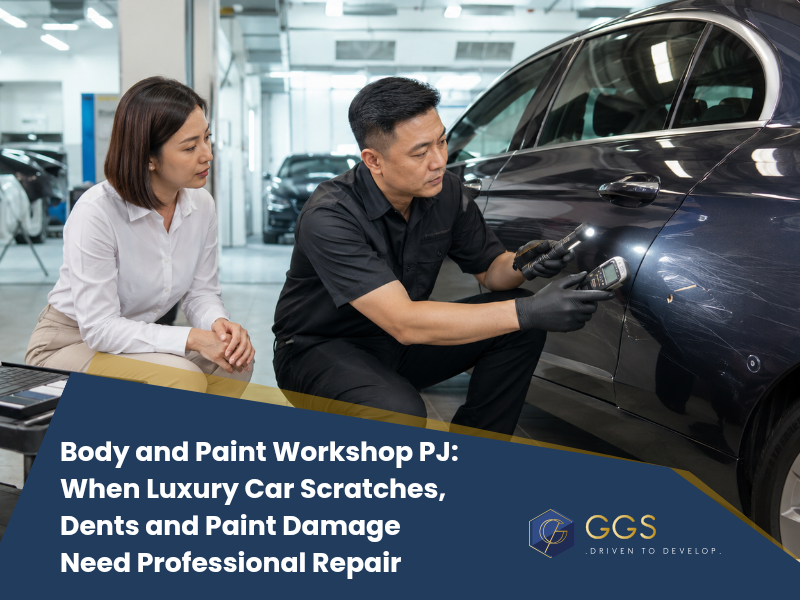
Table of Contents
Introduction
A scratch on the door, a dent on the bumper or chipped paint on the bonnet may look minor, especially when the vehicle still drives normally. However, exterior damage is not always limited to appearance. Once the protective paint layers are broken, moisture, dirt and road contaminants can reach the material underneath. A low-speed impact can also disturb brackets, trims, sensors or panel alignment without leaving dramatic visible damage.
For luxury and continental vehicles, the decision is even more important. These cars often use complex metallic or pearl finishes, aluminium panels, integrated parking sensors and carefully aligned exterior components. A quick cosmetic repair may hide the mark, but it may not restore the panel, finish or electronic systems properly.
For drivers looking for a body and paint workshop in PJ, the key question is not simply whether the damage looks bad. It is whether the damage is likely to spread, affect nearby components or reduce the quality and value of the vehicle.
Common Body and Paint Damage in Petaling Jaya
Luxury cars in Petaling Jaya are frequently exposed to tight basement car parks, narrow parking bays, heavy traffic, road debris and sudden tropical rain. Common situations include:
- Door scratches caused by contact with pillars or nearby vehicles
- Bumper dents from low-speed parking incidents
- Stone chips on the bonnet and front bumper
- Scraped lower panels caused by kerbs or ramps
- Paint transfer after light contact
- Dents around wheel arches or bodylines
- Cracked paint near bumper sensors
- Previous repair areas beginning to peel or discolour
The right response depends on where the damage is located, how deep it is and whether the panel contains sensors, cameras, wiring or structural mounting points.
Is the Damage Cosmetic or Protective?
Automotive paint does more than provide colour. Most painted panels use several layers, including primer, colour coat and clear coat. Together, these layers protect the panel from sunlight, moisture, chemicals and surface contamination.
A light mark in the clear coat may remain cosmetic. Once the scratch reaches the colour or primer layer, the protective system becomes weaker. If bare steel is exposed, corrosion may begin. Aluminium panels do not rust in the same way as steel, but exposed aluminium can oxidise and still require proper preparation before refinishing.
Plastic bumpers and trims present a different issue. They do not corrode, but the paint may crack, peel or lose adhesion after an impact. A damaged plastic bumper can also hide broken clips, displaced brackets or sensor mounts.
The safest approach is to judge the damage by material, depth and location rather than by appearance alone.
How Deep Is the Scratch?
Light clear-coat scratches
These scratches affect only the transparent upper layer. They are commonly caused by improper washing, light branches, fingernails around door handles or paint transfer from another object.
Professional polishing may reduce or remove some of these marks. However, polishing works by levelling a small amount of clear coat, so it should not be treated as a solution for every scratch.
Scratches through the colour layer
If the scratch shows a different colour underneath, the basecoat may have been damaged. Polishing cannot replace missing colour. The area may require sanding, colour application and clear-coat refinishing.
Primer-level damage
A grey, white or pale line may indicate that the scratch has reached the primer. The metal may not yet be exposed, but the panel has lost part of its protective coating. Delaying repair can allow moisture to enter through the damaged area.
Bare metal exposure
Visible metal should be repaired promptly. Steel panels can develop corrosion, while aluminium panels can oxidise and create adhesion problems if left untreated.
A small touch-up may temporarily cover a chip, but it may not restore the original smoothness, colour consistency or long-term protection.
Does the Dent Need Paintless Dent Repair or Repainting?
A shallow dent with intact paint may be suitable for paintless dent repair. This technique reshapes the panel without sanding or repainting, which helps preserve the original finish.
However, paintless dent repair is not suitable when:
- The paint has cracked or chipped
- The dent is located on a sharp bodyline
- The metal has stretched
- The dent sits on a panel edge
- Access behind the panel is limited
- The panel is made from a material requiring a different repair method
- The area has been repaired previously
A dent near a door edge, wheel arch or strong styling line may require conventional panel correction and refinishing. On luxury vehicles, these areas must be restored carefully because uneven reflections and panel contours are more noticeable.
When a Small Impact Needs More Than Cosmetic Repair
A light parking impact may leave only a bumper mark, but the visible surface does not always reveal what happened behind it.
Arrange a more detailed inspection if you notice:
- Uneven gaps between the bumper and body
- A loose grille, trim or lamp
- Parking sensors behaving differently
- A camera warning message
- A door, bonnet or boot lid that no longer closes smoothly
- New wind noise or water leakage
- A vibration that began after the impact
- A warning light appearing on the dashboard
Premium vehicles may have radar, ultrasonic sensors, cameras and wiring behind painted panels. If these parts are removed, shifted or replaced, diagnostic checks or calibration may be necessary.
When an impact affects the lower body, wheel area or underside, the inspection should not stop at the paintwork.
Polishing, Touch-Up, Local Repair or Full Repaint?
Polishing
Polishing is generally suitable for shallow clear-coat marks, paint transfer, mild oxidation and washing scratches. It is not suitable when colour, primer or metal is exposed.
Touch-up paint
Touch-up paint may help seal a very small stone chip. It is mainly a protective solution rather than an invisible cosmetic repair. On metallic, pearl and dark paint, the repaired spot may remain noticeable.
Localised refinishing
A small repair area may be sanded, repainted and blended. This can work well when the damage is contained and the paint allows a smooth transition into the surrounding area.
Full-panel repainting
A complete panel repaint may be more appropriate when:
- There are several scratches on one panel
- The clear coat is failing
- The paint colour is difficult to blend
- The panel has been repaired poorly before
- The damage extends across a bodyline
- A consistent finish cannot be achieved locally
The correct choice should be based on repair quality, not only the lowest initial cost.
Why Luxury Car Paint Matching Is More Demanding
A paint code is only the starting point. The same code may have several production variants, and the paint already on the vehicle may have changed slightly through age, sunlight exposure or previous refinishing.
Metallic paint can look lighter or darker depending on how the flakes settle. Pearl finishes may use several layers to create depth. Matte finishes require special care because polishing can permanently change the sheen.
A professional refinishing process may include:
- Paint-code and variant identification
- Test panels or spray-out cards
- Controlled blending
- Inspection under different lighting
- Adjustment for metallic or pearl orientation
- Matching gloss and surface texture
Poor colour matching is often most visible under sunlight, fluorescent lighting or when viewing two adjacent panels from an angle.
What Should a Professional Inspection Include?
Before repair begins, the workshop should determine exactly what is damaged and what must be removed.
A proper assessment may include:
- Photographing and mapping the damaged area
- Checking scratch depth
- Inspecting panel gaps and alignment
- Looking for previous repairs
- Measuring paint thickness where useful
- Checking clips, brackets and mounting points
- Inspecting nearby sensors, lamps and wiring
- Deciding whether the panel should be repaired or replaced
- Identifying the correct paint system
- Preparing an itemised quotation
For more serious impact damage, the inspection may also extend to suspension, steering, brakes or the undercarriage.
How a Professional Body and Paint Repair Is Carried Out
A good repair is built through preparation, not simply by applying new paint.
The process normally begins with cleaning the panel and removing wax, grease, tar, silicone and other contaminants. The technician then reshapes the dent, removes unstable paint or corrosion and prepares the damaged area.
Primer restores adhesion and protection. The colour coat restores the appearance, while the clear coat provides gloss and environmental resistance. After curing, the repaired area is inspected, polished where appropriate and reassembled.
Where bumpers, mirrors or other sensor-equipped parts are involved, electronic functions should be tested before the vehicle is returned.
Body and paint work also requires proper control of dust, solvents, chemical exposure and paint-related waste. In Malaysia, workshop operations may be subject to occupational safety, environmental and scheduled-waste requirements. For the vehicle owner, the practical sign of good compliance is an organised repair process, controlled paint application and proper documentation.
How to Inspect the Repair Before Accepting the Vehicle
Check the repaired area in natural daylight whenever possible. Look at the panel from several angles rather than directly from the front.
Watch for:
- Colour mismatch between adjacent panels
- Uneven gloss
- Visible blending edges
- Overspray on trims or rubber seals
- Sanding marks beneath the finish
- Paint runs, pinholes or trapped dust
- Excessive difference in surface texture
- Loose trims or lamps
- Irregular panel gaps
- Parking sensors or cameras not functioning normally
Open and close nearby doors, the bonnet and the boot lid. Confirm that warning lights are not present and that the vehicle does not produce new noises or vibrations.
When Should Paint Damage Be Repaired Immediately?
Do not delay an inspection when:
- Bare metal is visible
- Rust or oxidation has started
- Paint is bubbling or peeling
- A crack is spreading across the finish
- A bumper or panel is loose
- A lamp or sensor has moved
- A sharp damaged edge is exposed
- Water enters the vehicle
- A door or bonnet does not close securely
- The impact affected steering, suspension or braking
Mechanical or safety symptoms should be investigated separately from the cosmetic repair.
Frequently Asked Questions
1. Can all scratches be polished out?
No. Polishing only helps when the damage remains within the clear coat. Deeper scratches require paint repair.
2. How can I tell if metal is exposed?
Bare steel or aluminium usually appears silver inside the scratch. A deep line that catches a fingernail should be assessed.
3. Does every dent need repainting?
No. Paintless dent repair may work if the paint is intact and the panel has not stretched or creased severely.
4. Is touch-up paint enough for a stone chip?
It may protect a small chip temporarily, but it may not provide a smooth or invisible finish.
5. Why does repaired metallic paint sometimes look different?
Metallic-flake position, paint thickness, spraying technique and lighting can change how the colour appears.
6. Should a parking sensor be checked after bumper repair?
Yes, especially if the impact occurred near the sensor or the bumper was removed.
7. Can a previously repainted panel be detected?
Sometimes. Paint-thickness readings, colour variation, overspray and surface texture may indicate earlier refinishing.
8. Will professional repainting reduce resale value?
A well-documented professional repair is usually preferable to visible damage, corrosion or poor-quality paintwork.
9. How soon can a newly painted car be washed?
This depends on the paint system and curing process. Follow the repairer’s instructions before washing, waxing or polishing.
10. What should be included in a body and paint quotation?
The quotation should identify the affected panels, repair method, parts to be removed or replaced, paintwork required and any diagnostic or calibration work.
Conclusion
Luxury car body and paint damage should be assessed according to depth, material, location and effect on nearby components. A light clear-coat mark may need only careful polishing, while cracked paint, exposed metal, distorted panels and sensor-related damage require more detailed repair.
The purpose of professional body and paint work is not merely to make the vehicle look better. It should restore protection, alignment, electronic function and finish quality while preventing small damage from developing into a larger and more expensive problem.