Expert Articles for Smarter Car Care
Brake Noise in Premium Cars: What Squeaking, Grinding and Vibration Mean
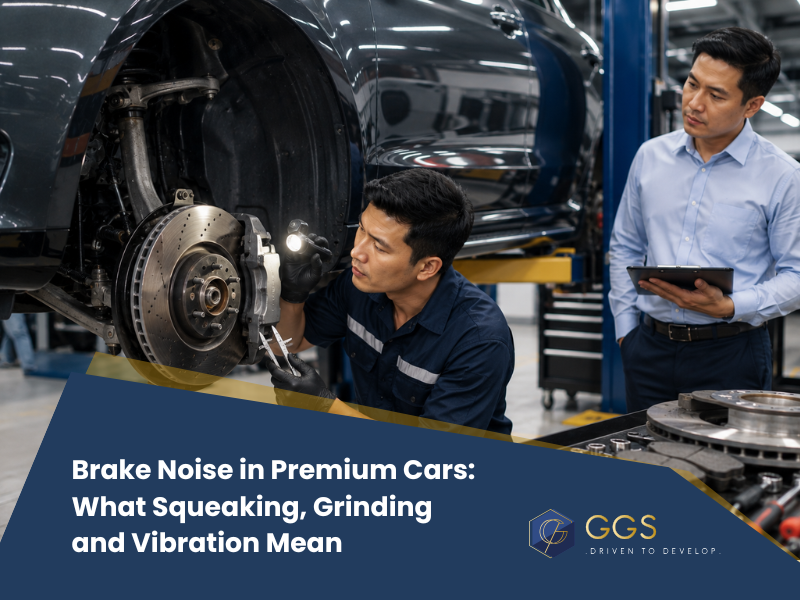
Table of Contents
Introduction
Brake noise in a premium car should never be ignored. These vehicles are designed to deliver smooth, controlled and confident braking, so any squeaking, grinding, scraping or vibration can quickly affect the owner’s driving comfort and safety confidence.
However, brake noise does not always mean the same thing. A light squeak may be caused by brake dust or pad material, while grinding may indicate serious brake pad wear. Vibration during braking may point to uneven brake discs, wheel hub issues, suspension looseness or brake system imbalance.
For premium, luxury, continental and high-performance vehicles, the braking system must be inspected properly before parts are replaced. Brake pads, discs, calipers, sensors, fluid, ABS components, tyres and suspension parts may all need to be checked to confirm the real cause.
Why Brake Noise Should Not Be Ignored in Premium Cars
Brake noise is a symptom, not a diagnosis. The sound may come from the brake pads, brake discs, brake calipers, dust shields, sensors, wheel bearings or even suspension components near the wheel area.
In premium vehicles, braking comfort matters because the overall driving experience is expected to be quiet, stable and refined. A brake system that squeaks, grinds or vibrates can make the car feel less secure, even if it still stops.
More importantly, brakes are safety-critical. Any sound that becomes louder, more frequent or appears together with vibration, warning lights, longer stopping distance or brake pedal pulsation should be inspected early.
Common Types of Brake Noise and What They Mean
Squeaking Brake Noise
Squeaking is one of the most common brake complaints. It may happen during light braking, early morning driving, after rain, or when the brakes are cold.
Possible causes include brake dust, moisture, pad compound, pad glazing, worn brake pads, or a wear indicator touching the disc. In some cases, a light squeak may be temporary. However, if the noise continues, becomes louder or happens every time the brake is applied, the brake system should be checked.
Premium vehicles may also be more sensitive to brake pad compound. A pad that stops the car may still create excessive noise, dust or vibration if it does not suit the vehicle’s braking system.
Grinding Brake Noise
Grinding is usually more serious than squeaking. It may mean the brake pad material is very low or that metal parts are contacting the brake disc.
If ignored, grinding can damage the disc surface and increase the cost of repair. The vehicle may still move, but the braking system may no longer be working at its best. Grinding noise should be inspected as soon as possible, especially if it happens when slowing down, stopping or reversing.
Scraping or Clicking Noise
A scraping sound may come from a bent dust shield, small stones, debris, loose brake hardware, pad clips or caliper-related parts. Clicking noises may happen if brake components are not seated properly or if there is movement in the wheel area.
Although scraping or clicking may sometimes be minor, it should not be dismissed without inspection. A technician may need to remove the wheel to check the brake pads, caliper, disc surface and surrounding hardware.
Vibration When Braking
Brake vibration, also called brake judder, can feel like shaking through the steering wheel, brake pedal, seat or vehicle body. This may happen when braking from higher speed or when applying moderate pressure.
Possible causes include uneven brake disc surface, rotor runout, disc thickness variation, heat spots, wheel hub issues, loose suspension components or tyre problems.
Premium cars often have larger brake systems and heavier vehicle weight, so brake vibration can be very noticeable. A proper inspection should check both the brake system and the wheel assembly before deciding what needs replacement.
Brake Pedal Pulsation
Brake pedal pulsation feels like the brake pedal is moving or pulsing under the driver’s foot. This may be related to uneven brake discs, ABS activation, hydraulic system behaviour or surface irregularities.
If pedal pulsation happens only during emergency braking or slippery conditions, it may be normal ABS operation. However, if it happens during normal braking on dry roads, the brake system should be checked.
Steering Wheel Shake During Braking
If the steering wheel shakes when braking, the front brake discs, wheel hubs, tyres or suspension components may be involved. Many owners assume this is a wheel balancing issue, but if the shaking happens mainly during braking, brake disc condition should be inspected.
A workshop should not replace parts based on assumption. The technician should check brake disc surface, rotor runout, front suspension looseness and tyre condition.
Common Causes of Brake Noise in Premium Cars
Worn Brake Pads
Brake pads wear down over time. When the friction material becomes thin, the brake may squeak, grind or trigger a brake warning sensor. Driving with worn pads can damage the brake discs and reduce braking performance.
Uneven Brake Disc or Rotor Wear
Brake discs provide the surface for the pads to grip. Over time, they may become scored, uneven, heat-marked or below safe thickness. Uneven disc surfaces may cause vibration, pedal pulsation or noise.
Brake Dust Build-Up
Brake dust is produced as the pads and discs wear. Some pad materials create more dust than others. Dust build-up may cause light squeaking, rubbing or dirty wheel surfaces. Cleaning may help, but persistent noise should still be inspected.
Wrong Brake Pad Compound
Premium and high-performance vehicles may require brake pads with suitable friction characteristics. An unsuitable pad compound may cause squeaking, excessive dust, poor pedal feel or reduced braking confidence.
Correct brake parts matter because the brake system must match vehicle weight, driving style, heat demand and comfort expectations.
Stuck or Uneven Brake Caliper Movement
Brake calipers press the pads against the discs. If a caliper does not move smoothly, one pad may wear faster than the other. This can cause dragging noise, uneven braking, heat build-up or vibration.
Caliper slide pins, pad clips and hardware should also be checked during brake inspection.
Poor Brake Bedding-In
New brake pads and discs may need proper bedding-in. If the surface transfer layer forms unevenly, the brakes may become noisy or develop vibration. This is why correct installation and post-replacement procedure are important.
Heat Stress from Performance Driving
Repeated hard braking can generate high heat. Heat stress may cause pad glazing, disc surface changes, brake fade or vibration. This is especially relevant for high-performance vehicles, heavier premium cars or cars used for spirited driving.
Brake Sensor or ABS-Related Issues
Modern brake systems may include wear sensors, ABS sensors, wheel speed sensors and electronic parking brake functions. If brake noise appears with warning lights, diagnostic scanning may be required to check the electronic braking system.
Brake Noise vs Suspension, Tyre or Wheel Problems
Not all noises near the wheel come directly from the brakes. Some sounds may be caused by suspension bushings, wheel bearings, tyres, dust shields or loose hardware.
For example, a knocking sound during braking may involve suspension play. Steering shake during braking may involve brake discs, but tyre or wheel hub condition should also be checked. A scraping sound may come from the brake shield instead of the pads.
This is why a proper brake diagnosis should include more than a quick visual check.
How a Workshop Diagnoses Brake Noise
A professional brake inspection usually begins with a customer symptom interview. The technician should ask what type of sound is heard, when it happens, whether it occurs during light or hard braking, whether the brakes are hot or cold, and whether any warning light appears.
Next, a road test helps reproduce the symptom. The technician may test light braking, firm braking, low-speed braking and steering response.
After that, the wheels may be removed for inspection. The workshop should check brake pad thickness, inner and outer pad wear, brake disc surface, disc scoring, heat marks, caliper movement, pad clips, dust shields and brake hardware.
Brake fluid level and condition should also be checked. If warning lights are present, a diagnostic scan may be needed to check ABS, brake sensors or electronic parking brake components.
When Should Brake Pads or Discs Be Replaced?
Brake pads should be replaced when the friction material is low, when the wear indicator activates, or when inspection shows uneven or unsafe wear.
Brake discs may need replacement if they are scored, uneven, below minimum thickness, heat-damaged, cracked or causing vibration. In some cases, pads and discs should be replaced together to restore smooth braking.
Calipers should be serviced or repaired if they are sticking, dragging or causing uneven wear.
Is It Safe to Drive with Brake Noise?
It depends on the type and severity of the noise. A temporary light squeak may not always be urgent, but grinding, vibration, pedal pulsation, warning lights or longer stopping distance should be inspected as soon as possible.
If the brake noise becomes loud or the car does not feel stable when braking, the vehicle should not be driven unnecessarily. Brake issues can affect stopping distance, control and road safety.
For premium cars, early inspection helps protect safety, comfort and repair cost.
FAQ
1. Why do premium car brakes squeak?
Premium car brakes may squeak due to brake dust, pad compound, moisture, glazing, worn pads or wear indicators. Persistent squeaking should be inspected.
2. Is grinding brake noise serious?
Yes. Grinding may indicate severe brake pad wear or metal contact with the brake disc. It should be checked quickly to prevent further damage.
3. Why does my steering wheel shake when braking?
Steering shake during braking may be caused by uneven front brake discs, rotor runout, wheel hub issues, suspension play or tyre condition.
4. Can brake dust cause noise?
Yes. Brake dust can sometimes cause light squeaking or rubbing noise. However, persistent or loud noise should still be checked.
5. Do premium cars need specific brake pads?
Yes. Premium and high-performance vehicles often require brake pads that match their braking system, vehicle weight, heat demand and comfort expectations.
6. Can the wrong brake pads cause squeaking?
Yes. An unsuitable brake pad compound may cause squeaking, excessive dust, poor brake feel or faster wear.
7. When should brake pads be replaced?
Brake pads should be replaced when the friction material is low, the wear indicator activates, or inspection shows unsafe wear.
8. When should brake discs be replaced?
Brake discs should be replaced if they are scored, uneven, below minimum thickness, heat-damaged, cracked or causing vibration.
9. Can brake noise be caused by suspension or wheel issues?
Yes. Some noises near the wheel area may involve suspension parts, wheel bearings, tyres, hubs or dust shields, so proper inspection is needed.
10. Is it safe to drive with brake noise?
Light temporary squeaking may not always be urgent, but grinding, vibration, warning lights, pedal pulsation or longer stopping distance should be inspected promptly.