Expert Articles for Smarter Car Care
Why Premium Cars Need Proper Pre-Repair Inspection Before Major Repairs
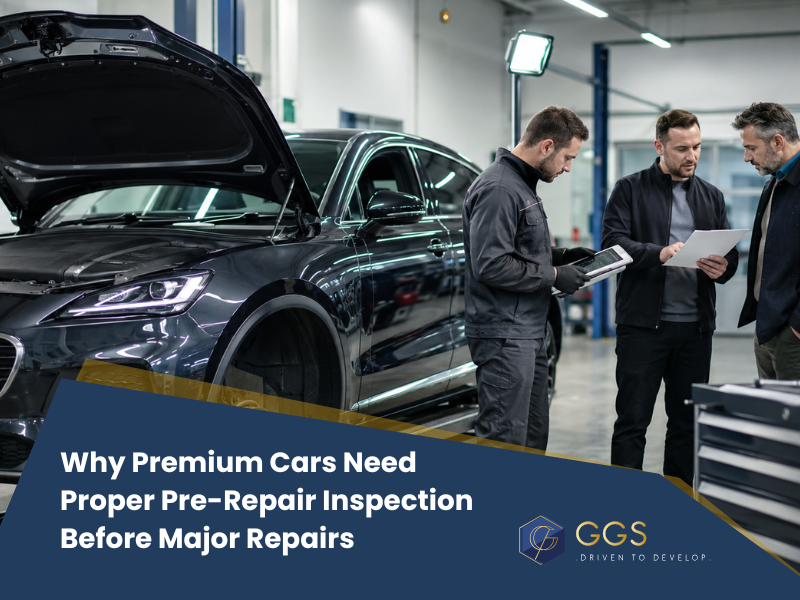
Table of Contents
Introduction
Premium cars are designed for comfort, performance, safety and refinement. When something goes wrong, the repair decision should not be rushed. Whether the issue involves the engine, gearbox, suspension, brakes, electronics or body structure, a proper pre-repair inspection is important before approving any major work.
A pre-repair inspection helps identify the actual cause of the problem before parts are replaced. For premium vehicles, this matters even more because many systems are connected. A warning light, noise, vibration, oil leak or rough driving symptom may not always point directly to one failed component. It may be caused by a sensor, wiring issue, fluid condition, mounting wear, control module fault, mechanical damage or previous repair work.
From a workshop owner’s perspective, this article is not only about educating customers. It is also about building trust. A responsible premium workshop should not simply recommend major repairs based on assumptions. It should inspect, test, explain and document the findings clearly before asking the owner to approve expensive work.
What Is a Pre-Repair Inspection?
A pre-repair inspection is a structured vehicle check carried out before major repair work begins. It may include a customer symptom interview, diagnostic scan, road test, visual inspection, undercarriage check, fluid condition check and quotation explanation.
The objective is simple: confirm what is wrong, understand how serious it is, and decide what needs to be repaired first.
For example, if a premium car has a gearbox jerking issue, the cause may not always be internal gearbox failure. It could be old transmission fluid, worn mountings, poor engine performance, sensor irregularities or control module adaptation. Without proper inspection, the owner may approve an expensive repair that does not solve the real problem.
Why Premium Cars Should Not Be Repaired Based on Guesswork
Premium cars often use advanced engines, automatic or dual-clutch transmissions, adaptive suspension systems, electronic braking systems, multiple sensors and complex control modules. These systems work together. When one area is not functioning properly, another system may show symptoms.
This is why guess-based repair can become expensive. A fault code may indicate a problem area, but it does not always mean that a specific part must be replaced immediately. The fault may be triggered by wiring, low voltage, fluid contamination, mechanical wear or a related component.
A good workshop should treat fault codes as clues, not final answers. The technician still needs to confirm the issue through live data, physical inspection and real driving behaviour.
When Should Owners Request a Pre-Repair Inspection?
A pre-repair inspection is especially important before approving major engine, gearbox, suspension, brake, electrical or body repair work.
For engine repairs, the workshop should check oil condition, coolant condition, leaks, ignition components, fuel delivery, air intake, compression-related symptoms and engine mounting condition. An engine symptom may come from a smaller supporting system rather than the engine itself.
For gearbox or transmission repairs, the workshop should check fault codes, transmission live data, road test behaviour, fluid condition, mountings and related engine performance. Gearbox work can be costly, so the diagnosis must be accurate.
For suspension repairs, the vehicle should be lifted safely so the technician can inspect control arms, bushings, ball joints, shock absorbers, ride height, tyres and undercarriage components. Many suspension noises are only clear when inspected from below.
For brake repairs, the workshop should check brake pads, discs, calipers, brake fluid, sensors, vibration and braking balance. Brake-related issues affect safety, so they should not be delayed.
For electrical or sensor replacement, the workshop should inspect wiring condition, battery voltage, alternator output, connectors, control module communication and live sensor data. Replacing a sensor without checking its circuit may lead to repeated failure.
For body and paint repair, the workshop should inspect both visible and hidden damage. Panel alignment, bumper fitment, underbody damage, paint matching and structural condition should be reviewed before preparing the quotation.
What Should a Proper Pre-Repair Inspection Include?
A proper inspection should start with the customer’s explanation. The technician should ask when the issue started, whether it is constant or intermittent, whether warning lights appear, and whether the problem happens when the car is cold, hot, moving slowly or travelling at higher speed.
Next, a diagnostic scan may be carried out. This helps identify fault codes, control module communication issues and abnormal live data. However, a scan alone is not enough. It must be supported by technician judgement.
A road test is also important. Some faults only happen under real driving conditions. During a road test, the technician can observe acceleration, braking, gear changes, steering response, vibration, noise and overall drivability.
Visual inspection follows. The engine bay, wiring, hoses, belts, connectors, leaks and mounting condition should be checked. Sometimes, obvious issues can be seen before dismantling any part.
Undercarriage inspection is equally important. Many problems are hidden underneath the vehicle, including oil leaks, gearbox leaks, loose mountings, suspension wear, exhaust issues, underbody damage and brake line concerns.
Fluid condition should also be checked. Engine oil, transmission fluid, coolant, brake fluid and other fluids can reveal overheating, contamination, leakage or poor maintenance history.
Finally, the workshop should explain the quotation clearly. The owner should understand what needs to be repaired, why it is required, which repairs are urgent, which items can be monitored, and what the estimated timeline and cost will be.
Why a Diagnostic Scan Alone Is Not Enough
Many owners believe that a diagnostic scan can immediately identify the exact repair required. In reality, a scan is only one part of the inspection process.
A fault code may show that a sensor reading is abnormal, but it may not explain why. The issue could be the sensor, wiring, connector, power supply, mechanical fault or another system affecting the reading.
For premium cars, this is especially important because there are many connected electronic systems. A low battery voltage, communication error or previous repair issue may cause multiple fault codes at the same time.
This is why a professional workshop combines diagnostic scanning with road testing, visual inspection and physical checks.
How Inspection Helps Avoid Unnecessary Repair Costs
Proper inspection protects the owner from approving unnecessary repairs. It also protects the workshop from disputes and repeated complaints.
When the root cause is confirmed, the repair recommendation becomes easier to explain. The owner can see why the repair is needed, what the risk is, and what will happen if the issue is ignored.
This is especially important for premium vehicles because parts and labour can be costly. A wrong diagnosis may lead to unnecessary replacement of expensive components. A proper inspection helps prioritise the right repair at the right time.
When Should You Ask for a Second Opinion?
A second inspection may be useful when the repair cost is high, the explanation is unclear, the same problem keeps returning, or the recommendation is based only on assumptions.
It is also reasonable to ask for a second opinion if the workshop cannot explain the inspection findings, does not provide a proper quotation breakdown, or recommends major replacement without testing related components.
A trustworthy workshop should not be offended by customers asking questions. Clear communication is part of professional repair service.
Safety and Compliance Considerations
Major vehicle repairs can affect road safety, braking stability, steering control, engine performance and emissions. A responsible workshop should consider roadworthiness before and after repairs.
Workshop practices should also follow general safety and environmental responsibilities. This includes safe use of hoists, proper handling of batteries, safe storage of automotive chemicals, correct disposal of used engine oil, responsible handling of coolant and brake fluid, and proper workshop waste management.
Repair documentation is also important. Inspection notes, diagnostic findings, photos where relevant, quotation details and customer approval records help create transparency between the workshop and the vehicle owner.
Choosing a Premium Workshop for Pre-Repair Inspection
A premium workshop should be systematic, transparent and technically prepared. Owners should look for a workshop that can explain its inspection process clearly, perform diagnostic scanning, conduct road testing, inspect the vehicle from underneath, check relevant fluids and provide a clear quotation.
The workshop should also be able to explain repair priority. Not every issue requires immediate replacement, but safety-related items should not be ignored. A good workshop helps the owner make informed decisions instead of creating pressure to approve everything at once.
For premium cars, the best repair decision starts before the repair itself. It starts with proper inspection.
FAQ
1. What is a pre-repair inspection?
A pre-repair inspection is a structured check carried out before major repair work. It may include diagnostic scanning, road testing, visual inspection, undercarriage checks, fluid inspection and quotation explanation.
2. Why do premium cars need inspection before major repairs?
Premium cars often have complex engine, transmission, suspension, braking and electronic systems. Proper inspection helps confirm the actual cause before costly repairs are approved.
3. Is a diagnostic scan enough before repair?
No. A diagnostic scan is useful, but it should be supported by road testing, physical inspection and technician judgement. Fault codes are clues, not always final answers.
4. Should I approve a major repair immediately?
You should first understand the diagnosis, inspection findings, urgency, repair scope and quotation details before approving any major repair work.
5. When should I ask for a second opinion?
A second opinion is useful when the repair cost is high, the explanation is unclear, the same problem keeps returning, or the diagnosis is based only on assumptions.
6. What should be checked before gearbox repair?
A workshop should check fault codes, transmission live data, fluid condition, road test behaviour, gearbox mountings and related engine performance before confirming gearbox repair.
7. What should be checked before engine repair?
The inspection may include oil and coolant condition, leaks, ignition system, fuel delivery, air intake, diagnostic data, compression-related symptoms and engine mounting condition.
8. Can inspection reduce unnecessary repair costs?
Yes. Proper inspection can identify the real cause of the problem and prevent replacement of parts that are not faulty.
9. What should a repair quotation include?
A clear quotation should include the diagnosed issue, recommended repair, parts required, labour cost, urgency, estimated repair time and any optional or preventive items.
10. Why is undercarriage inspection important?
Undercarriage inspection can reveal hidden leaks, suspension wear, damaged components, loose mountings, brake line issues and underbody damage that may not be visible from above.