Expert Articles for Smarter Car Care
Understanding Common Porsche Repair Issues: Diagnosis, Risks, and Proper Care in Klang Valley
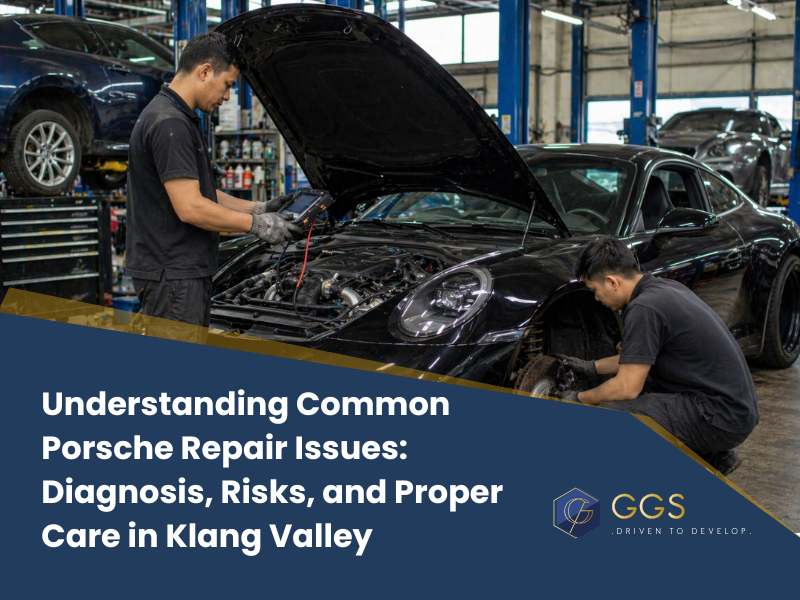
Table of Contents
Introduction
Porsche vehicles are engineered for performance, precision, and driving enjoyment. However, this high level of engineering also means that they require careful maintenance and a deeper understanding of how their systems function. In the Klang Valley, where driving conditions include heavy traffic, high temperatures, and frequent stop-and-go movement, these vehicles are subjected to additional stress that can accelerate wear and tear.
Understanding common repair issues, recognising early warning signs, and adopting a structured diagnostic and maintenance approach are essential to preserving performance and avoiding costly repairs. This guide explains what typically goes wrong, why it happens, and how proper servicing can extend a Porsche’s lifespan.
Understanding Porsche Engineering Characteristics
Porsche vehicles are designed with a focus on performance and efficiency. Engines often operate at higher temperatures and are engineered to deliver strong power output while maintaining precision control.
These vehicles also rely on the integration of mechanical and electronic systems. From engine management to braking and suspension, each component is interconnected. This complexity means that even a minor issue in one system can affect overall performance.
In the Klang Valley, constant traffic congestion, prolonged idling, and high ambient temperatures can place additional strain on these systems, making proactive maintenance especially important.
Why Porsche Vehicles Require Specialist Attention
Due to their advanced design, Porsche vehicles are more sensitive to the quality of maintenance than conventional cars.
High-performance engines require efficient cooling and lubrication systems to operate safely. The transmission system is designed for smooth and responsive gear changes, which depend on proper servicing and fluid condition.
Electronic systems, including sensors and control units, must function accurately to maintain performance and safety. Any disruption to these systems can trigger warning indicators or reduce efficiency.
Because of this complexity, specialist-level diagnostics and servicing are essential to ensure that issues are properly identified and resolved.
Key Vehicle Systems in Porsche Cars
Engine and Cooling System
The engine generates significant heat during operation, especially under performance driving conditions. The cooling system regulates temperature through coolant circulation and heat dissipation. Failure in this system can lead to overheating and severe engine damage.
Suspension and Steering System
Porsche vehicles are known for their precise handling. This is achieved through finely tuned suspension components. Over time, wear in bushings or mounts can affect stability and ride comfort.
Brake System
High-performance braking systems are designed to handle intense conditions. However, repeated braking in traffic can generate excessive heat, leading to issues such as brake pulsation or rotor wear.
Engine Ventilation and Emission System
The air-oil separation system helps maintain engine efficiency. Failure in this system can lead to increased oil consumption and visible smoke.
Electrical and Sensor Systems
Sensors and control units monitor various aspects of vehicle performance. Faults in these systems can trigger warning lights or cause irregular behaviour.
Common Repair Issues in Porsche Vehicles
Several issues are commonly observed across Porsche vehicles.
Cooling system problems, such as coolant leaks or pump failures, can lead to overheating. Suspension wear may result in noise, reduced stability, or uneven handling.
Brake issues, particularly pulsation during braking, are often caused by heat stress and rotor wear. Engine ventilation problems, such as air-oil separator failure, can affect engine performance and produce visible smoke.
Electrical faults, including sensor malfunctions, may lead to inconsistent performance or warning indicators.
Recognising Early Warning Signs
Early detection of issues is crucial.
Drivers may notice unusual smells, such as coolant or oil odours, which can indicate leaks. Vibrations or pulsations while driving may suggest brake or suspension problems.
Clunking noises can signal worn components, while visible fluid leaks or residue under the vehicle should never be ignored. Dashboard warning indicators also provide important signals that require attention.
Recognising these signs early can prevent more serious problems from developing.
Causes of Porsche Mechanical Issues
Many mechanical issues arise from a combination of factors.
High operating temperatures place stress on components, particularly in performance engines. Stop-and-go driving in the Klang Valley increases wear on brakes, suspension, and cooling systems.
Ageing materials, such as rubber seals and plastic components, can degrade over time. Irregular maintenance or the use of incorrect fluids can further accelerate deterioration.
Understanding these causes helps drivers adopt better maintenance practices.
Risks of Ignoring Early Symptoms
Ignoring early warning signs can lead to significant risks.
Cooling system issues can escalate into engine overheating, causing extensive damage. Suspension problems can affect vehicle stability, making driving less safe.
Brake issues may compromise stopping performance, increasing the risk of accidents. Electrical faults can disrupt multiple systems, leading to unpredictable behaviour.
From a financial perspective, delaying repairs often results in higher costs, as minor issues develop into major failures.
Professional Diagnostic Approach
A structured diagnostic process is essential for identifying the root cause of issues.
Technicians begin by understanding the symptoms described by the driver. A road test is conducted to replicate the issue under real conditions.
Advanced diagnostic tools are used to scan electronic systems for faults. Mechanical inspections are then performed on key components, including the cooling system, suspension, brakes, and engine.
By combining data from these steps, technicians can accurately identify the underlying problem and recommend appropriate repairs.
Standard Service Procedures
Once the issue is identified, appropriate service procedures are carried out.
Cooling system repairs may involve fixing leaks and flushing the system. Suspension components are replaced to restore stability and handling.
Brake systems are serviced to address pulsation or wear, while engine ventilation issues may require component replacement. Electrical faults are resolved through sensor replacement or system recalibration.
After repairs, testing is conducted to ensure that the vehicle performs as expected.
Preventive Maintenance Strategy
Preventive maintenance is the most effective way to extend the lifespan of a Porsche.
Regular servicing based on usage conditions helps maintain system performance. Monitoring fluid levels and replacing them at recommended intervals ensures proper operation.
Routine inspections allow early detection of wear and potential issues. Keeping detailed service records also helps track maintenance history and plan future servicing.
In demanding environments like the Klang Valley, consistency in maintenance is essential.
Regulatory and Safety Considerations in Malaysia
Vehicle maintenance is closely linked to safety standards. In Malaysia, the Road Transport Department Malaysia ensures that vehicles meet roadworthiness requirements.
The Department of Environment Malaysia regulates the proper handling and disposal of automotive fluids to minimise environmental impact.
Maintaining a vehicle in good condition not only ensures compliance but also contributes to overall road safety.
Choosing a Specialist Workshop in Klang Valley
Selecting the right workshop is critical for maintaining a Porsche.
A qualified workshop should have experienced technicians, proper diagnostic equipment, and a structured service workflow. Clear communication and transparency in repairs help drivers understand what needs to be done and why.
Choosing a workshop with the right expertise ensures that issues are resolved effectively and that the vehicle continues to perform at its best.
Conclusion
Porsche vehicles offer exceptional performance, but they require a disciplined approach to maintenance. Understanding common repair issues, recognising early warning signs, and relying on structured diagnostic and service procedures are key to preserving performance.
In the Klang Valley, where driving conditions can be demanding, proactive maintenance is essential. By addressing issues early and maintaining a consistent service routine, drivers can ensure their vehicles remain reliable, safe, and enjoyable for years to come.
FAQ
1. What are the most common issues in Porsche vehicles?
Common issues include cooling system leaks, suspension wear, brake pulsation, and sensor faults.
2. Why do Porsche cars overheat?
Cooling system failures, such as leaks or malfunctioning components, often cause overheating.
3. What is an air-oil separator issue?
It is a failure in the engine ventilation system that can lead to increased oil consumption and visible smoke.
4. How often should Porsche cars be serviced?
Servicing intervals depend on usage, but regular maintenance following recommended schedules is essential.
5. Are Porsche repairs expensive?
Costs can be higher due to the vehicle’s complexity, but preventive maintenance helps reduce major expenses.
6. Can Klang Valley traffic affect Porsche performance?
Yes, frequent stop-and-go driving increases stress on key systems, such as the brakes and cooling system.
7. What are the signs of suspension wear?
Clunking noises, reduced stability, and uneven handling are common indicators.
8. Is it safe to drive with minor issues?
It is not advisable, as minor issues can escalate into serious problems.
9. How are Porsche issues diagnosed?
Through a combination of road testing, diagnostic scanning, and physical inspection.
10. Can preventive maintenance extend vehicle lifespan?
Yes, consistent maintenance significantly improves reliability and longevity.