Expert Articles for Smarter Car Care
Mini Cooper Cooling System Problems: Radiator, Coolant Leaks, and Overheating Signs
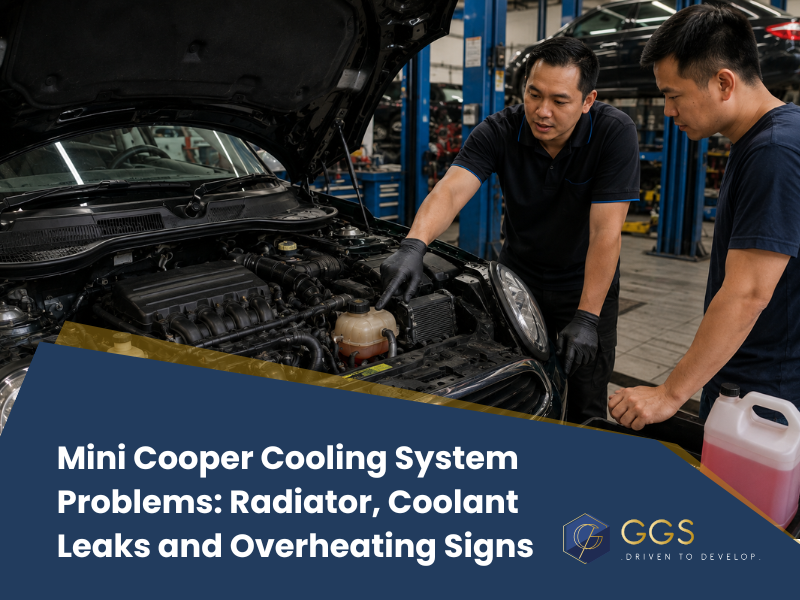
Table of Contents
Introduction
Mini Cooper owners often enjoy the car for its compact size, responsive handling, and fun driving feel. However, because the engine bay is relatively tight and many models feature efficient yet heat-sensitive components, the cooling system requires careful attention. A small coolant leak, a weak radiator fan, or trapped air in the system can quickly lead to overheating if ignored.
The cooling system is responsible for keeping the engine within a safe operating temperature. When it works properly, coolant absorbs heat from the engine, flows through the radiator, releases heat into the air, and then returns to the engine to repeat the cycle. When one part of this system fails, the temperature can rise quickly.
For Mini Cooper owners, the key is not to assume that the radiator is the cause of every overheating problem. The radiator is important, but so are the thermostat, water pump, expansion tank, hoses, radiator fan, coolant condition, and bleeding procedure.
Why Mini Cooper Cooling Systems Need Proper Care
Mini Coopers can be sensitive to cooling system problems because of their compact engine layout. Heat can build up quickly, especially during stop-start city driving, long idling, or spirited driving. Turbocharged models may also generate higher heat under load.
Another common concern is age-related wear. Plastic cooling system parts, such as expansion tanks, thermostat housings and hose connectors, may become brittle after years of heat cycles. A small crack may begin as a minor coolant loss but later develop into a serious leak.
This is why repeated coolant top-ups should not be treated as normal. If the coolant level keeps dropping, there is usually a reason. It may be an external leak, an internal leak, trapped air, or a component that is no longer sealing properly.
What Does the Radiator Do in a Mini Cooper?
The radiator acts as a heat exchanger. Hot coolant flows from the engine into the radiator. As air passes through the radiator fins, heat is released from the coolant. The cooled fluid then circulates back into the engine.
The radiator works together with several other parts. The water pump moves coolant around the system. The thermostat controls when coolant flows through the radiator. The radiator fan helps pull air through the radiator when the car is moving slowly or sitting in traffic. The expansion tank stores coolant as it expands and contracts with temperature changes.
If the radiator is leaking, blocked, or damaged, the engine may overheat. However, similar symptoms can also be caused by a stuck thermostat, a weak water pump, a failed radiator fan, or air trapped in the cooling system.
Common Signs of Mini Cooper Cooling System Problems
One of the clearest warning signs is a temperature warning light or overheating message. If this appears, do not ignore it. A Mini Cooper engine can suffer serious damage if it continues running while overheated.
Another sign is repeated low coolant level. If you top up the coolant and the level drops again within a short period, the system should be checked. Coolant may be leaking from the radiator, hoses, expansion tank, thermostat housing, or water pump.
You may also notice a sweet smell after driving. Coolant often has a slightly sweet smell, so this may suggest a leak onto hot engine parts. A puddle under the car, especially near the front or side of the engine bay, can also indicate coolant loss.
Steam from the engine bay is more serious. It may mean coolant is boiling, escaping under pressure or contacting hot engine components. If this happens, stop safely and allow the engine to cool. Do not open the coolant cap while the engine is hot.
Other signs include the radiator fan not running, the heater blowing cold air when the engine is hot, overheating in traffic, or the temperature rising after spirited driving.
Is It the Radiator, Thermostat, Water Pump or Fan?
Many owners assume the radiator is faulty whenever the car overheats, but this is not always correct.
A radiator problem may involve a leak, blockage or damaged fins. If the radiator cannot release heat properly, the coolant remains too hot and the engine temperature rises.
A thermostat problem may prevent coolant from flowing at the correct time. If the thermostat is stuck closed, coolant may not reach the radiator properly, causing overheating.
A weak or leaking water pump may fail to circulate coolant through the engine. Even with a good radiator, poor circulation can still cause high temperatures.
A radiator fan problem often shows up during traffic or idling. When the car is moving at higher speed, natural airflow helps cool the radiator. When the car is stationary, the fan becomes more important. If the fan does not switch on, the car may overheat in traffic but seem normal on the highway.
This is why proper diagnosis matters. Replacing the radiator without checking the thermostat, water pump and fan may not solve the problem.
Why Mini Coopers Overheat in Traffic
Overheating in traffic usually points to an airflow or cooling control issue. When a car is moving, air naturally passes through the radiator. In traffic, there is much less airflow, so the radiator fan must work harder.
If the radiator fan motor, relay, fuse, temperature sensor or control module fails, the fan may not operate when needed. The result is often overheating during long idling, slow traffic or hot weather.
Low coolant level can make this worse. Air pockets may form inside the cooling system, reducing heat transfer. This is why correct bleeding after coolant replacement or cooling system repair is important. If air remains trapped, the engine may still overheat even after coolant has been topped up.
What Should You Do If the Coolant Warning Light Comes On?
First, stay calm and reduce engine load. If the temperature warning light stays on, the temperature rises quickly, or steam appears from the engine bay, stop the car safely as soon as possible.
Let the engine cool before checking anything. Never open the coolant cap or pressure cap while the engine is hot. The system may be under pressure, and hot coolant can escape suddenly.
Once the engine is cool, the coolant level can be checked according to the owner’s manual. If the level is low, topping up with the correct coolant may help temporarily, but it does not fix the cause. If the warning returns, the vehicle should not be driven normally until the cooling system is inspected.
Avoid pouring cold water suddenly into a severely overheated engine. A rapid temperature change may create further stress. When unsure, it is safer to arrange an inspection than to risk engine damage.
Coolant Flush, Radiator Repair or Replacement: What Is Needed?
The correct repair depends on the cause.
A coolant flush may be useful if the coolant is old, rusty, contaminated or sludgy. Fresh coolant helps protect the system from corrosion and supports proper heat transfer. However, a flush will not repair a cracked expansion tank, a leaking hose, or a failed water pump.
Radiator replacement may be needed if the radiator core, plastic tanks or seams are leaking, or if the radiator is blocked or physically damaged. Hose replacement may be needed if the hoses are swollen, cracked or leaking.
A thermostat or thermostat housing replacement may be needed if coolant flow is not controlled properly. A water pump replacement may be required if the coolant is not circulating or the pump is leaking.
After any cooling system repair, proper refilling and bleeding are important. Trapped air can cause overheating, poor heater performance or false coolant level readings.
How Mini Cooper Owners Can Reduce Cooling System Problems
Regularly check the coolant level when the engine is cool. If the level drops repeatedly, investigate the cause. Do not rely on repeated top-ups.
Pay attention to smells, stains and warning lights. A sweet smell, dried coolant marks, steam, or a temperature warning should not be ignored.
Use the coolant type recommended in the owner’s manual. Mixing incompatible coolant types may reduce protection or create deposits. Water alone is not a proper long-term coolant substitute because it does not provide the same level of corrosion protection, boiling protection, or system stability.
Keep service records. This helps you track coolant changes, previous leaks, thermostat repairs, water pump replacement and radiator work. For used Mini Cooper buyers, cooling system history is especially useful because overheating can lead to expensive engine repairs.
When Should You Stop Driving?
Stop driving if the temperature warning light stays on, steam comes from the engine bay, coolant is leaking heavily, the temperature rises rapidly, engine power drops, or the warning message appears repeatedly.
You should also avoid long-distance driving if the coolant level drops again after topping up. A cooling system that cannot hold coolant is not safe to rely on.
Overheating is not something to “test” by continuing to drive. The safer approach is to stop, let the engine cool and arrange proper diagnosis.
FAQ
1. Why is my Mini Cooper overheating?
Common causes include low coolant, radiator leaks, a stuck thermostat, weak water pump, faulty radiator fan, blocked radiator, air trapped in the system or a cracked expansion tank.
2. Why does my Mini Cooper lose coolant?
Coolant loss may come from the radiator, hoses, expansion tank, thermostat housing, water pump or internal engine problems. Repeated coolant loss should always be investigated.
3. Can I drive my Mini Cooper with a coolant leak?
A small leak may seem manageable, but it can worsen quickly. If the temperature warning appears, coolant leaks heavily, or the level drops again after topping up, stop driving and arrange inspection.
4. Why does my Mini Cooper overheat in traffic but not on the highway?
This often suggests an airflow problem. The radiator fan may not be working properly, or the cooling system may be low on coolant or contain trapped air.
5. What does a sweet smell after driving mean?
A sweet smell may indicate coolant leaking onto hot engine parts. Check for coolant stains or falling coolant level when the engine is cool.
6. Is water enough instead of coolant?
Water alone is not suitable for long-term use. Proper coolant helps protect against corrosion, boiling, freezing and internal deposits. Use the coolant type recommended in the owner’s manual.
7. What does rusty or sludgy coolant mean?
Rusty or sludgy coolant may indicate old coolant, corrosion, contamination, or a mix of incompatible coolant types. The system may need flushing and further diagnosis.
8. Why is my heater blowing cold air when the engine is hot?
This may happen when coolant is low, air is trapped in the system, or coolant flow through the heater core is restricted.
9. Does a Mini Cooper cooling system need bleeding?
Yes, after coolant replacement or cooling system repair, any trapped air should be properly removed. Air pockets can cause overheating and poor heater performance.
10. When should I replace the radiator?
Radiator replacement may be needed if it is leaking, blocked, damaged, or unable to cool the engine properly. However, the thermostat, water pump, fan and hoses should also be checked before replacing parts.