Expert Articles for Smarter Car Care
Toyota Diagnostics and Upgrades: What Owners Should Know Before Modifying Their Car
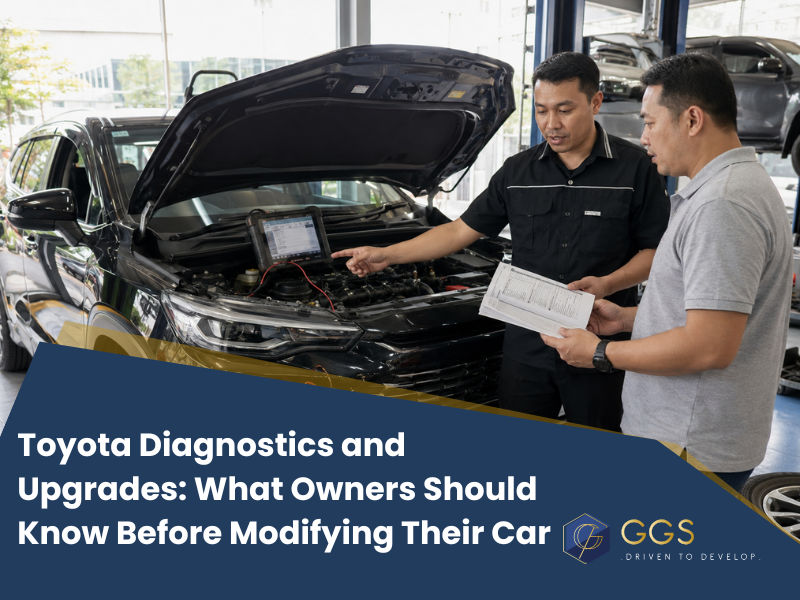
Table of Contents
Introduction
Toyota cars are popular because they are practical, reliable, and easy to live with. Whether you drive an Alphard, Vellfire, Harrier, Camry, Hilux, Land Cruiser, GR86 or GR Supra, the same rule applies: check the car’s condition before replacing parts or adding upgrades.
Modern Toyota models use many sensors, electronic control units, wiring systems and safety features. A warning light, rough drive, unusual sound or poor acceleration should not be guessed. Proper diagnostics help you understand what is actually wrong before spending money on repairs or modifications.
A good upgrade should make the car better suited to your real-world use. A family MPV, a daily sedan, a sports coupe, and an off-road pickup should not be upgraded in the same way.
Why Diagnostics Should Come First
Many car owners replace parts too quickly. For example, if the check engine light appears, they may immediately assume a sensor is faulty. But a warning light only tells you that the car has detected a problem. It does not always tell you the exact part to replace.
A Toyota diagnostic check can help confirm whether the issue is related to the engine, gearbox, hybrid system, brakes, suspension, battery, wiring or cooling system.
This is especially important before upgrades. If the car already has weak brakes, worn suspension, overheating issues or hidden fault codes, adding performance parts may make the problem worse.
For most owners, a proper check should include a diagnostic scan, road test, fluid check, tyre inspection, brake inspection, battery check and a look at the suspension and cooling system.
Common Problems Toyota Owners May Notice
Toyota owners may notice different signs depending on the model and how the car is used.
Common warning signs include:
- check engine light
- ABS or traction control warning
- hybrid system warning
- battery or charging warning
- engine temperature warning
- rough idle
- slow acceleration
- gear shifting hesitation
- vibration while driving
- poor fuel economy
- suspension knocking
- brake noise
- air-conditioning not cold
- coolant smell or overheating
Some of these problems may be minor. Others may affect safety or cause expensive repairs if ignored. For example, an overheating Toyota should be checked quickly because engine damage can be costly. Brake noise or steering vibration should also be taken seriously because they affect road safety.
Different Toyota Models Need Different Priorities
Not every Toyota owner wants the same thing from their car. That is why diagnostics and upgrades should match the model and purpose.
Alphard, Vellfire and Harrier
Owners of Alphard, Vellfire and Harrier models usually care about comfort, quietness and smooth driving. These cars are often used for family travel, business use or long-distance comfort.
Good upgrade areas may include suspension comfort, better tyres, brake confidence, air-conditioning performance and preventive maintenance. The goal should be refinement, not harshness.
For these models, avoid upgrades that make the ride too stiff or reduce reliability.
Camry and Everyday Toyota Models
For Camry and other daily Toyota models, most owners want reliability, fuel efficiency and low running stress.
Useful areas to check include engine smoothness, hybrid system health (where applicable), tyres, brakes, fluids, and the cooling system condition. Simple maintenance often gives better results than unnecessary modifications.
GR Supra and GR86
GR Supra and GR86 owners may care more about response, handling and performance. ECU tuning, intake upgrades, exhaust changes, suspension setup and brake upgrades may be considered.
However, performance upgrades should be planned carefully. The engine, gearbox, cooling system, tyres and brakes should be in good condition first. Chasing horsepower without checking heat management, fuel quality and braking ability can reduce reliability.
Hilux and Land Cruiser
Hilux and Land Cruiser owners often need strength, durability and confidence on rough roads or long-distance trips.
For these models, suspension strength, cooling system health, tyre choice, brake condition and drivetrain inspection are important. Torque and durability may be more useful than high-speed performance upgrades.
Toyota Hybrid Models
Toyota hybrid vehicles need careful diagnosis because they involve high-voltage systems, inverter cooling, regenerative braking and electronic controls.
Hybrid warning lights should not be ignored. Owners should also avoid casual handling of high-voltage components.
What to Check Before Upgrading a Toyota
Before upgrading, ask one simple question:
What do I want to improve?
The answer may be comfort, safety, fuel efficiency, handling, braking, load carrying or performance.
Once the goal is clear, check the car’s condition first. Important areas include:
- engine condition
- gearbox behaviour
- cooling system
- brakes
- tyres
- suspension
- steering
- battery and electrical system
- warning lights or stored fault codes
For example, if you want better acceleration, make sure the engine is healthy first. If you want better handling, check the tyres, suspension and alignment. If you drive a heavy MPV or pickup, brakes and cooling should not be overlooked.
Balanced upgrades are usually safer than extreme upgrades. More engine power is not useful if the car cannot brake properly or stay stable.
Safety, Warranty and Legal Considerations
Any upgrade should keep the vehicle safe and roadworthy.
Brakes, tyres, lights, steering and suspension should always be treated as priority systems. If your Toyota has warning lights related to braking, stability control, steering, charging, the hybrid system, or overheating, resolve those issues before upgrading.
Warranty and insurance also matter. Some modifications may affect warranty coverage or insurance terms. ECU tuning, exhaust changes, suspension changes and major performance upgrades may need to be declared.
Road legality is another important point. Exhaust noise, emissions-related parts, lighting changes and track-focused upgrades may not always be suitable for public roads.
In Malaysia, vehicle owners should keep their cars safe for road use. The Road Transport Act 1987 provides the broad legal framework for motor vehicles and road traffic, so modifications should not compromise safe operation.
The owner’s manual should always be the first reference for warning lights, maintenance intervals, tyre pressure, fluid specifications and safety instructions.
FAQ
1. Why should I diagnose my Toyota before replacing parts?
Because one symptom can have many causes. Diagnostics help confirm the real problem before you spend money on parts that may not fix the issue.
2. What does the check engine light mean in a Toyota?
It means the car has detected a fault in the engine, emissions or related system. A scan is needed to read the fault code and understand the cause.
3. Are Alphard and Vellfire upgrades mostly for comfort?
Yes, for most owners. Comfort, quietness, air conditioning, suspension feel, brakes, and reliability are usually more important than performance upgrades.
4. Can Toyota Supra or GR86 be tuned safely?
Yes, but only if the car is healthy and the tuning is suitable for the engine, gearbox, cooling system, fuel quality and driving purpose.
5. Should Hilux or Land Cruiser upgrades focus on power or durability?
For most owners, durability should come first. Cooling, suspension, tyres, brakes and torque delivery are usually more useful than chasing high power.
6. Are Toyota hybrids different to diagnose?
Yes. Hybrid systems include high-voltage components and special electronic controls. Hybrid warnings should be checked with proper diagnostic equipment.
7. Should I upgrade brakes or suspension before engine performance?
Often, yes. A car should be able to stop and stay stable before more power is added.
8. Can poor maintenance affect upgrade results?
Yes. Old fluids, worn tyres, weak brakes, overheating problems or hidden fault codes can reduce performance and reliability after upgrades.
9. Will modifications affect insurance or warranty?
They can. ECU tuning, suspension changes, exhaust upgrades and other modifications may affect warranty or insurance. Keep records and check the terms.
10. What is the safest first step before upgrading a Toyota?
Start with a full vehicle health check. Once the car is confirmed to be in good condition, choose upgrades based on how you actually use the vehicle.